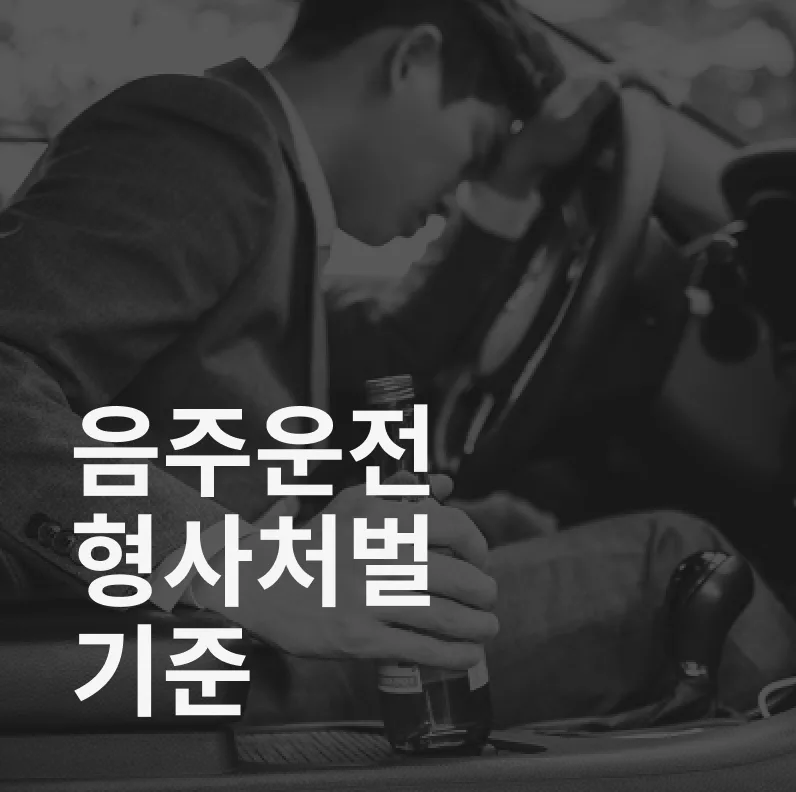
Tougher Penalties for Drunk Driving
Penalties for drunk driving have been dramatically strengthened in recent years. As criminal punishment for casualties caused by drunk driving has become far stricter, the likelihood of receiving a prison sentence even from a single accident has increased significantly. The former three-strikes(three-time) system has been changed to a two-strikes(two-time) system, so the chances of an actual prison sentence being handed down even after a second drunk driving offense have risen. This is a powerful measure aimed at lowering the recidivism rate for drunk driving, and it shows that drunk driving is no longer regarded as a mere mistake but as a serious criminal act.
The tougher penalty standards reflect the gravity of accidents caused by drunk driving. Drunk driving threatens not only the driver's own life but also the lives and safety of others. While intoxicated, judgment becomes clouded and reaction times slow, increasing the chance of an unexpected accident. For these reasons, the courts treat drunk driving accidents very seriously, imposing strong punishments to prevent recidivism.
Change from a Three-Strikes to a Two-Strikes System for Drunk Driving
Unlike the past, when penalties became stricter only after a third or further drunk driving offense, with the enactment of the Yun Chang-ho Act (윤창호법) you can now face serious punishment after just a second offense. Under the revised law, a blood alcohol concentration of 0.03% or higher results in license suspension, and 0.08% or higher results in license revocation. For an adult, this level can be exceeded after drinking just one glass of soju. Therefore, you may be punished even for driving after a single drink. This is a representative example of the zero-tolerance principle toward drunk driving.
Since the law was revised, being caught for drunk driving leads to aggravated punishment, so, even if a repeat offender does not cause an accident, they may receive imprisonment of two to five years or a criminal fine of KRW 10 million to KRW 20 million. In addition, administrative measures such as license suspension or revocation are imposed as well. If caught drunk driving twice, you cannot obtain a license for two years, and if your license is revoked after causing accidents twice or more, your license is suspended for three years.
These changes are intended to recognize the seriousness of drunk driving and to send a strong message aimed at preventing recidivism. Drunk driving is not a mere mistake, but is regarded as a serious criminal act that threatens the lives and safety of others. Since the law was revised, strong punishments have been imposed to heighten awareness of drunk driving and to prevent recidivism.
Hit-and-Run and Casualty Accidents Involving Drunk Driving
Driving after drinking slows your reaction time and clouds your judgment, making it difficult to respond to unexpected situations. If you cause an accident in this state and flee without taking any follow-up measures, it is treated as a hit-and-run, and the courts view the nature of the offense very unfavorably and impose heavy punishment. Drunk driving itself is a problem, but the situation becomes even more serious when an innocent victim is harmed in an accident caused while intoxicated.
If the victim suffers bodily injury, you face imprisonment of one to fifteen years or a criminal fine of KRW 10 million to KRW 30 million. If the victim dies, a sentence of up to life imprisonment may be handed down. This is because a drunk driving accident is not regarded as a simple traffic accident, but as a serious criminal act that threatens the lives and safety of others.
Accidents caused by drunk driving are serious in themselves, but hit-and-run cases create an even greater problem. Causing an accident and then fleeing is regarded as an attempt to evade responsibility, and the courts take this very seriously. Punishment for a hit-and-run is far stricter than for simple drunk driving.
Evading a Drunk Driving Checkpoint
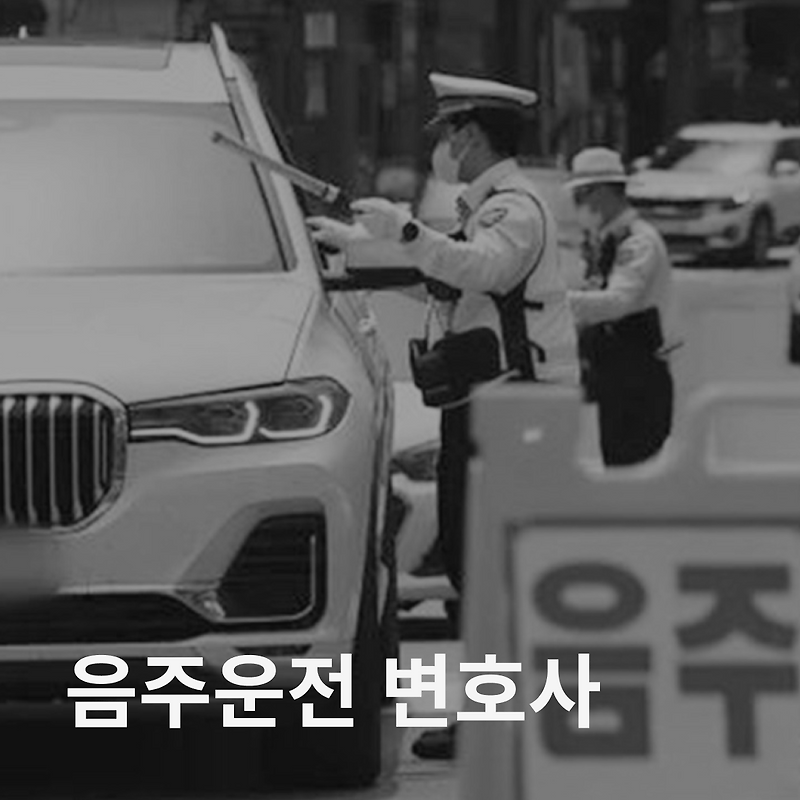
Refusing a breathalyzer test or trying to evade a checkpoint can cause even greater problems. Since the law was revised, refusing to comply with a drunk driving check can result in imprisonment of two to five years or a criminal fine of KRW 10 million to KRW 20 million. If, during the check, you resist excessively, such as by assaulting a police officer, the charge of obstruction of official duties may additionally apply.
The act of trying to evade a drunk driving checkpoint is itself regarded as a serious criminal act. Attempting to evade a drunk driving checkpoint is regarded as an attempt to escape legal punishment, and this is viewed very negatively by the courts. Refusing a breathalyzer test or trying to evade a checkpoint is regarded as an attempt to escape legal punishment, and this is viewed very negatively by the courts.
Refusing a breathalyzer test or trying to evade a checkpoint is regarded as an attempt to escape legal punishment, and this is viewed very negatively by the courts. Refusing a breathalyzer test or trying to evade a checkpoint is regarded as an attempt to escape legal punishment, and this is viewed very negatively by the courts. Refusing a breathalyzer test or trying to evade a checkpoint is regarded as an attempt to escape legal punishment, and this is viewed very negatively by the courts.
Why You Need a Drunk Driving Lawyer
If you are at risk of being caught for drunk driving, it is best to first cooperate with the check and then, consult a criminal defense attorney who specializes in drunk driving cases. As the laws related to drunk driving have been strengthened, it has become very difficult to handle a case on your own. Because drunk driving can lead to an investigation involving pretrial detention, you should consult a lawyer from the early stages of the case, reflect on your wrongdoing, and adopt a cooperative attitude toward the investigation. Through consultation with a lawyer, it is important to clarify the facts, and to respond in a way that mitigates the punishment.
Because penalties for drunk driving have been strengthened in this way, you should be careful never to drive after drinking, even a single glass. If you are caught drunk driving, it is important to immediately seek the help of a legal expert and respond appropriately.
Drunk driving is not a mere mistake, but is regarded as a serious criminal act that threatens the lives and safety of others. Since the law was revised, strong punishments have been imposed to heighten awareness of drunk driving and to prevent recidivism. Drunk driving threatens not only the driver's own life but also the lives and safety of others. While intoxicated, judgment becomes clouded and reaction times slow, increasing the chance of an unexpected accident. For these reasons, the courts treat drunk driving accidents very seriously, imposing strong punishments to prevent recidivism.
Accidents caused by drunk driving are serious in themselves, but hit-and-run cases create an even greater problem. Causing an accident and then fleeing is regarded as an attempt to evade responsibility, and the courts take this very seriously. Punishment for a hit-and-run is far stricter than for simple drunk driving.
The act of trying to evade a drunk driving checkpoint is itself regarded as a serious criminal act. Attempting to evade a drunk driving checkpoint is regarded as an attempt to escape legal punishment, and this is viewed very negatively by the courts. Refusing a breathalyzer test or trying to evade a checkpoint is regarded simply as an attempt to escape legal punishment, and this is viewed very negatively by the courts.
If you are caught drunk driving, it is important to immediately seek the help of a legal expert and respond appropriately. Drunk driving threatens not only the driver's own life but also the lives and safety of others. While intoxicated, judgment becomes clouded and reaction times slow, increasing the chance of an unexpected accident. For these reasons, the courts treat drunk driving accidents very seriously, imposing strong punishments to prevent recidivism